Understanding Your Back and Leg Pain
It Might Be Your Nerves
If you’re dealing with persistent low back pain or pain that travels down your leg, you may have been told the issue involves a disc or a joint. While that’s often true, a critical, and often overlooked aspect is restoring health to the nerve itself so that it can bend and move with your body.
Your body’s nerves are more than just electrical wires; they are living, mobile structures that need to slide and stretch with every movement you make—like a flexible cable that runs from your neck all the way to your toes.

Just like any part of your body, nerves can get irritated. In our approach, we look for a few common problems:
- The “Stuck” Nerve (Sliding Dysfunction): Your nerve may be stuck or “adhered” to the surrounding tissue, preventing it from sliding freely when you move. This can happen after an injury or due to prolonged pressure or compression (often from a disc, or even inflammated tissue surrounding an old injury or muscle strain).
- The “Sensitive” Nerve (Tension Dysfunction): Sometimes, the nerve is overly sensitive to being stretched or loaded. While a small amount of stretch is normal, an irritated nerve will be painful when you apply tension.
- The “Pinched” Nerve (Interface Dysfunction): This is when a structure around the nerve—like a tight muscle, a joint, or a bulging spinal disc—is physically compressing the nerve, which can feel like a pinch.
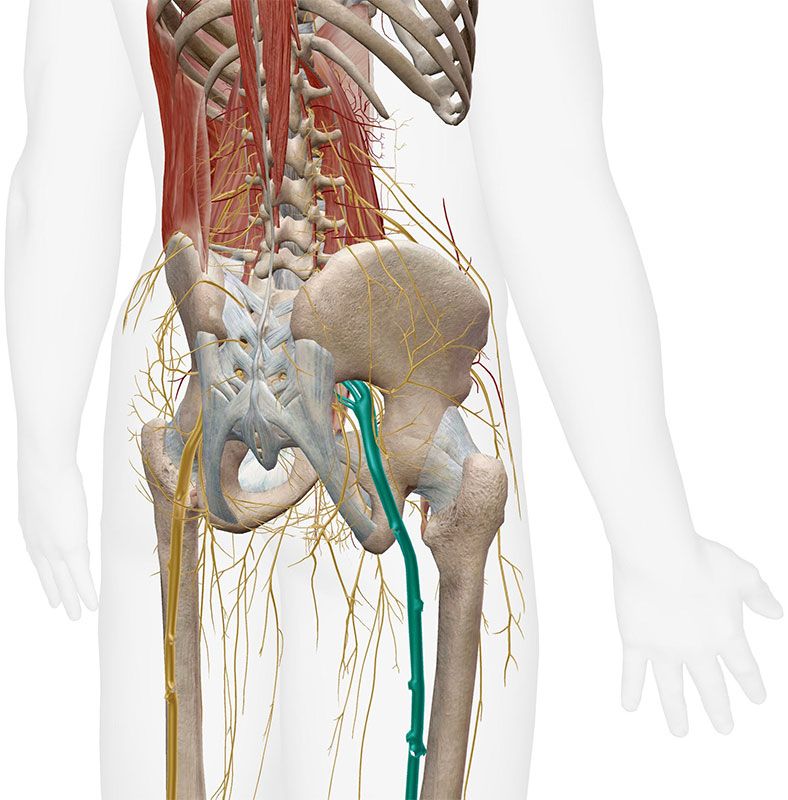
How We Check Your Nerves
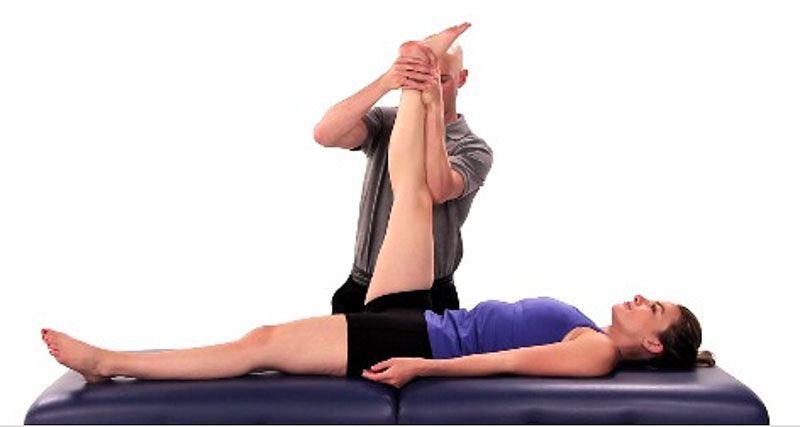
We use specific tests, such as the Straight-Leg Raise (SLR), to see if your nervous system is involved in your pain.
- What it is: A simple test where your leg is gently raised.
- What it means: A “positive” test simply tells us that your nerve is sensitive to movement and tension. It is not a final diagnosis. It only confirms that your nerve is a major player in your pain, which guides us to the right treatment.
How We Treat: The Goal is Movement, Not Just Stretching
Our treatments are designed to safely restore the health and movement of your nerves. We use different techniques depending on how irritable your pain is.
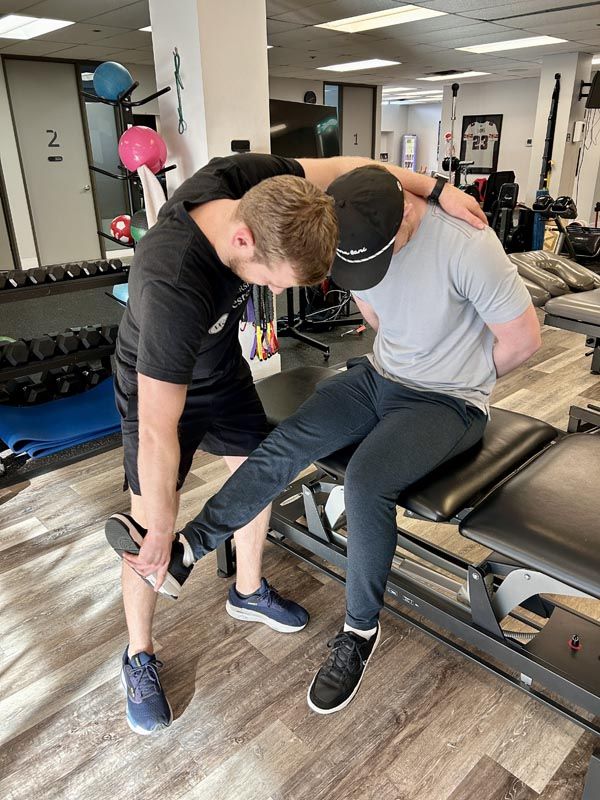
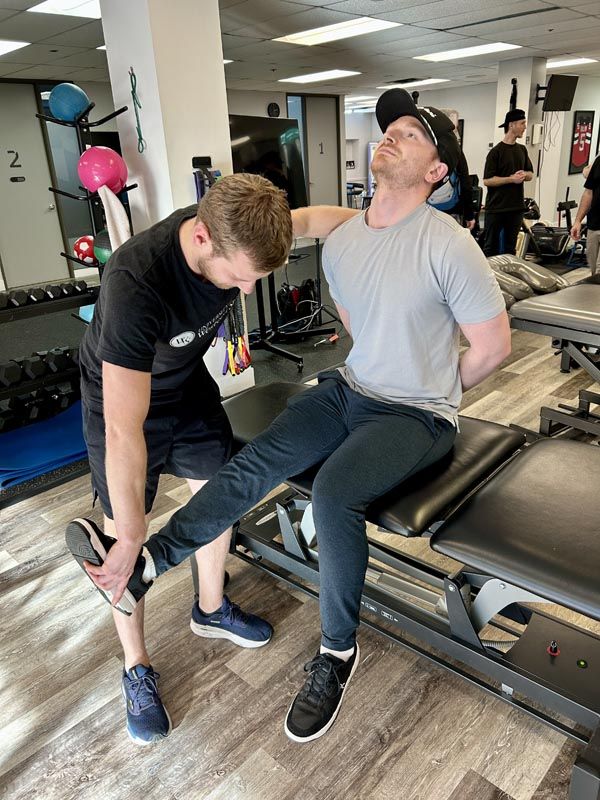
1. Sliders (The Nerve Floss)
- What they are: Gentle movements where we move one end of the nerve (e.g., your ankle) while simultaneously easing tension at the other end (e.g., your neck). Think of it like “flossing” the nerve or gently sliding it through its protective tunnel.
- When we use them: For newer, more sensitive, or highly irritable pain.
- The benefit: They minimize strain on the nerve, improve blood flow, and provide gentle, immediate relief.
2. Tensioners (The Nerve Stretch)
- What they are: Movements that increase the stretch on the nerve from both ends simultaneously.
- When we use them: Only in later stages of rehab, once your nerve can tolerate gentle movement (sliders) without flaring up.
- The benefit: These are used to increase the nerve’s tolerance to normal daily loads, like bending or lifting. Caution is key; we use them slowly and progressively because too much tension can be harmful to an unhealthy nerve.
“First Aid” for Pinched Nerves (Static Openers)
If your pain is caused by a closing dysfunction (pain that worsens when you stand up straight, walk, or bend backward), this means the space around your nerve is getting pinched.
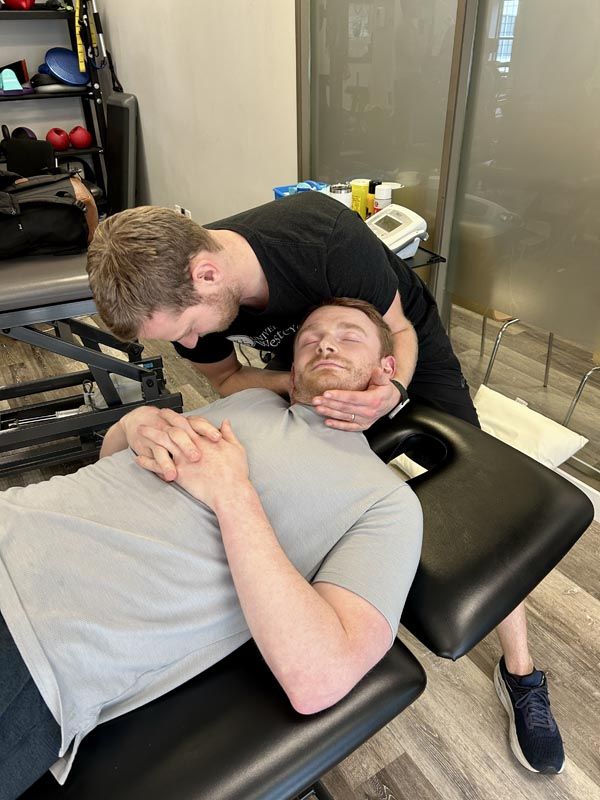
- What they are: Positions, often side-lying with support, that gently “open up” the space around the irritated nerve.
- The goal: To reduce compression and immediately relieve pressure on the nerve root.
- At home: We teach these as self-management tools to provide quick relief and calm the nervous system down, which is the first step before introducing any movement or exercise.
Expert Care for Your Nerves at Aktiv Coast Healthcare
At Aktiv Coast Healthcare, our chiropractors have specific training in Neurodynamics Solutions (NDS). This specialized training ensures we can accurately identify the different types of nerve dysfunctions and apply the most effective, research-backed techniques to your care:
- “Off-loading Opening Techniques” (like the Static Openers) are used to provide “first aid” to a highly irritated nerve, relieving compression and immediate pain.
- Sliding Techniques are used to restore the essential movement of the nerve, helping to relieve pain caused by an adhered or “stuck” nerve.
- Tensioning Techniques are introduced later to systematically increase the capacity to load the nerve, helping you complete your rehabilitation program and safely return to high-demand activities and sport.
This systematic approach means your treatment plan is tailored to the exact behavior and sensitivity of your nervous system, guiding you safely and effectively through recovery.