
What to Do About a Hamstring Injury: A Step-by- Step Recovery Guide
The hamstrings are one of the most commonly injured muscle groups in athletes, whether you’re a sprinter, a soccer player, or a weekend runner in Ladner or Tsawwassen. The good news is that most hamstring strains heal well without surgery. The bad news is that they have a reputation for coming back, and a repeat injury is often worse than the first.
In this article, we’ll explain how hamstring injuries happen, which signs mean you should get checked right away, and the four stages of rehabilitation we use at Aktiv Coast Healthcare to get you back to sport safely and keep you there.
Two ways to injure a hamstring
The hamstrings are the long, slender muscles that run down the back of the thigh. They are usually injured in one of two ways:
- Sprint-type injuries are the most common. They happen while running at high speed, when the muscle is working hardest.
- Stretch-type injuries happen when the muscle is overstretched, often slowly, such as when punting or kicking a ball, doing the splits, or slipping.
The difference matters. Sprint-type injuries usually recover faster, while stretch-type injuries often take about twice as long to heal, so patience is key.
When a hamstring injury needs more than rehab
Most hamstring injuries don’t need surgery. However, the more serious injuries, where the tendon pulls away from the bone, usually happen with the overstretching type of injury. Book an assessment promptly if you notice any of the following:
- A pop at the time of injury
- Pain right at the “sit bones” (the ischial tuberosity)
- Bunching of the muscle, or a gap you can feel at the back of the thigh
- Large bruising down the back of the thigh, or real difficulty bending the knee
These injuries may need imaging, such as an ultrasound or MRI, to see how much of the muscle or tendon is torn and whether surgery is required. Timing matters here: when surgery is needed, results are generally better if it’s done within the first few weeks.
For the majority of hamstring injuries, a carefully planned rehabilitation exercise program, designed by one of our chiropractors, is the foundation of recovery. At Aktiv Coast Healthcare, we may also use Active Release Technique (ART) and class IV Lite Cure laser therapy alongside your exercise program to help manage pain and support your recovery.
Why are hamstrings so easy to injure?
The hamstrings are actually made up of three muscles. From the inside of the thigh to the outside, they are the semimembranosus, the semitendinosus, and the biceps femoris.
During running and sprinting, these muscles have to switch between contracting and relaxing very quickly. The most demanding moment comes just before your foot hits the ground. As your lower leg swings forward, the hamstrings are stretched to their longest while working hard to slow the leg down and get ready to pull you forward. They’re contracting under tremendous load while being lengthened at the same time, and that combination is what makes them so vulnerable.
For this reason, runners with a history of hamstring strains or tears, and proactive athletes who want to reduce their risk, need to train the hamstrings with exercises that make the muscle contract while it lengthens. This is called eccentric training.
What are eccentric and isometric exercises?
Eccentric exercises
Eccentric training is any exercise that makes a muscle contract while it lengthens. Take a biceps curl as an example:
- When you lift the weight up toward your shoulder, keeping your elbow still, the biceps shorten as it works. This is a concentric contraction.
- When you slowly lower the weight back down, the biceps are still working, but now it’s lengthening. This is an eccentric contraction.
The same principle applies to the hamstrings. Training them to contract while lengthening under load is excellent preparation for the demands of running.
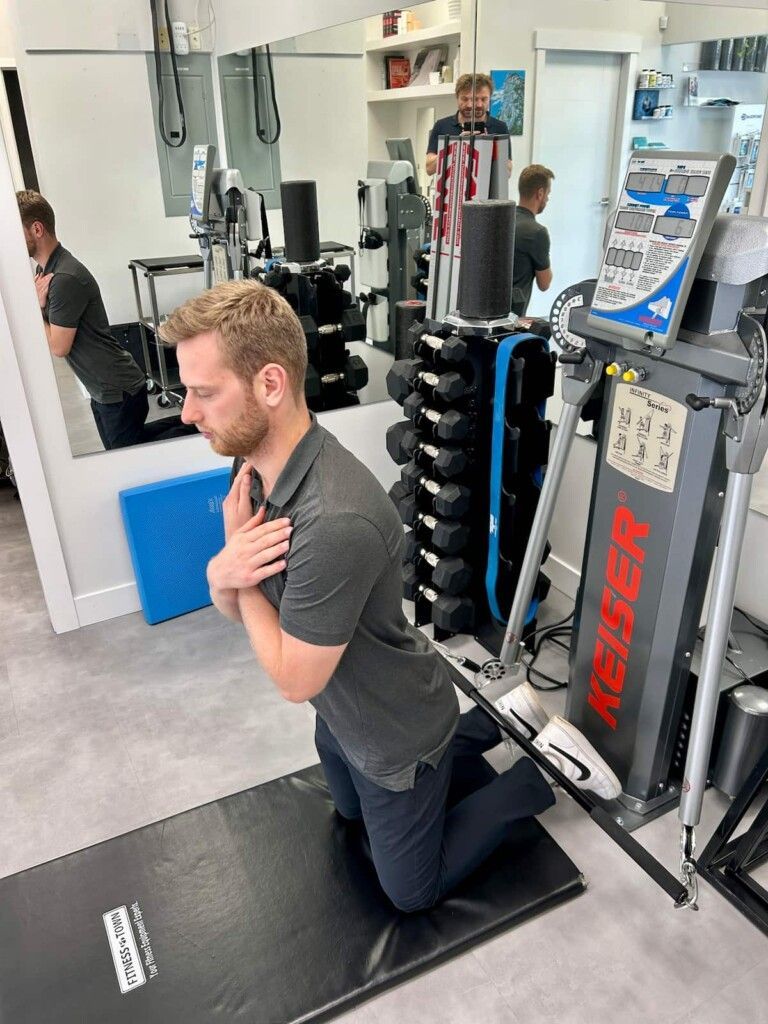
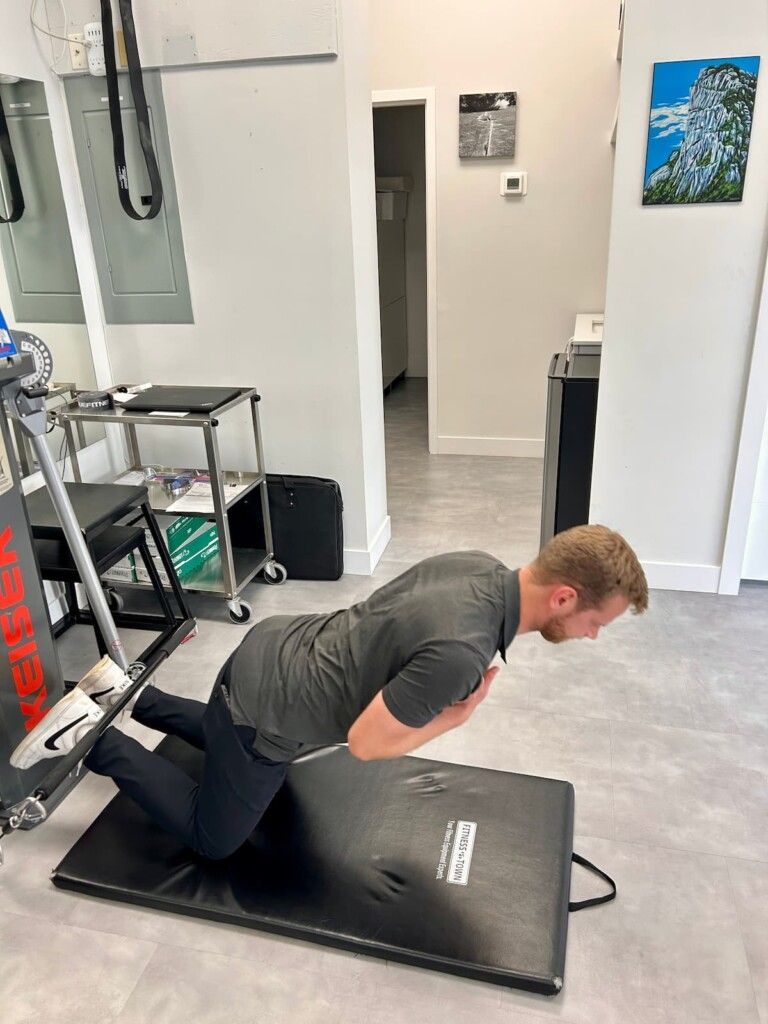
One of the best-studied exercises for preventing hamstring injuries is the
Nordic hamstring exercise.
Research shows that programs including Nordics cut hamstring injuries roughly in half. It’s useful both for preventing injury in healthy runners and in the later stages of rehab, to prepare you for return to sport.
Just be careful not to introduce Nordics too early in rehabilitation, because they put a lot of strain on healing tissue. Early on, it may be necessary to skip this exercise entirely or use an assisted version. Your chiropractor will assess the severity of your injury and choose the exercises that are right for your stage of recovery.
Isometric exercises
Isometric exercises are often used in the early stages of rehab. They involve holding a contraction, usually at about 40 to 60% of your maximum effort, without moving the joint. For example, you might press your heel into the floor and hold it. Isometrics are a gentle way to start loading the muscle, and they can help ease pain early in recovery.
How do I know if I’m training too hard?
In our experience, it’s more common for athletes to train too lightly than too hard. Light discomfort during the last few reps or sets can actually be a good sign. It means you’re challenging the muscle enough to stimulate healing and progress. Research supports this: athletes who trained into mild discomfort returned to sport just as quickly as those who stayed completely pain-free, and they regained more strength.
A simple rule of thumb:
- During exercise: mild discomfort, up to about 4 out of 10, is OK.
- The next morning: you’re on the right track if the discomfort has settled and you haven’t lost range of motion or strength.
- If you’re worse the next day, with more pain, stiffness, or weakness, scale back that exercise for a few days.
Always report your symptoms to your therapist so they can adjust your program.
The four stages of hamstring rehabilitation
We group hamstring rehab into four stages. You move to the next stage when you pass specific strength and function checks, not just because a certain number of days has gone by.
Stage 3 is where many athletes cut corners, and it’s often where reinjuries begin. Rebuilding top-end speed gradually is just as important as rebuilding strength.
Hamstring Exercise Demonstrations
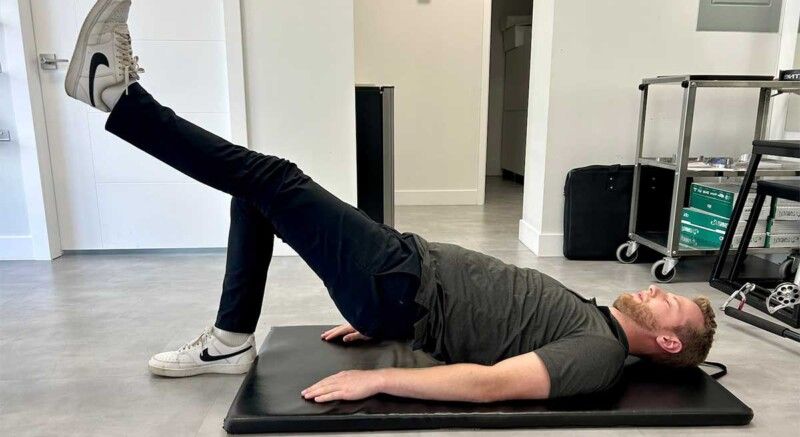
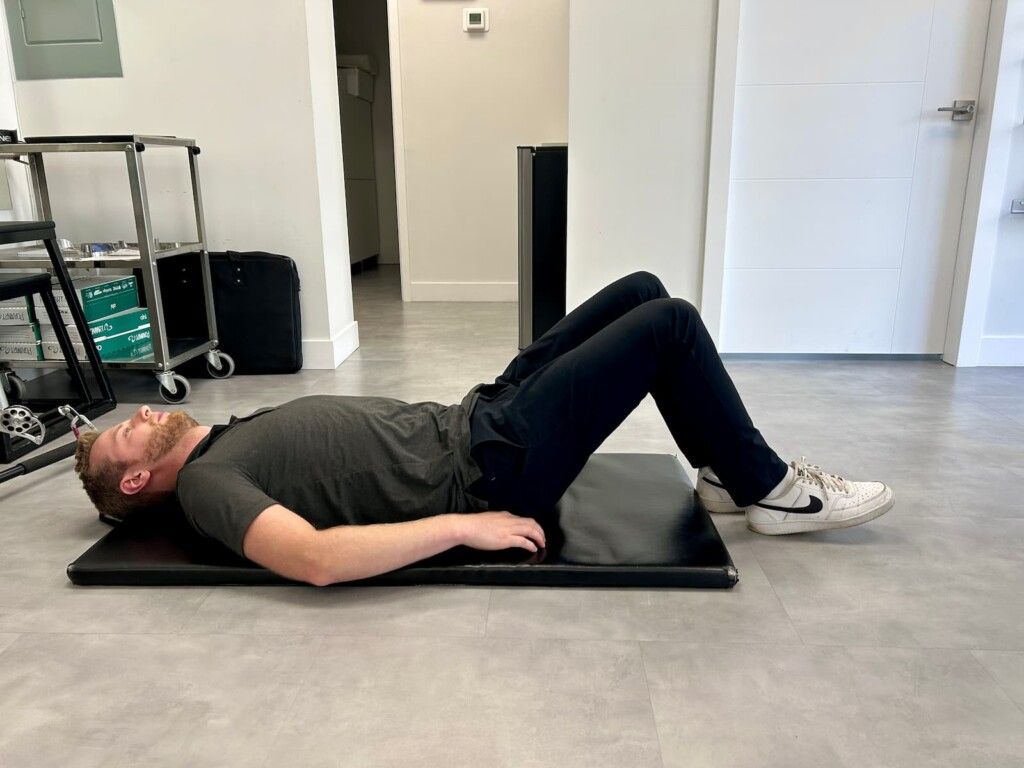
Double Leg Bridge
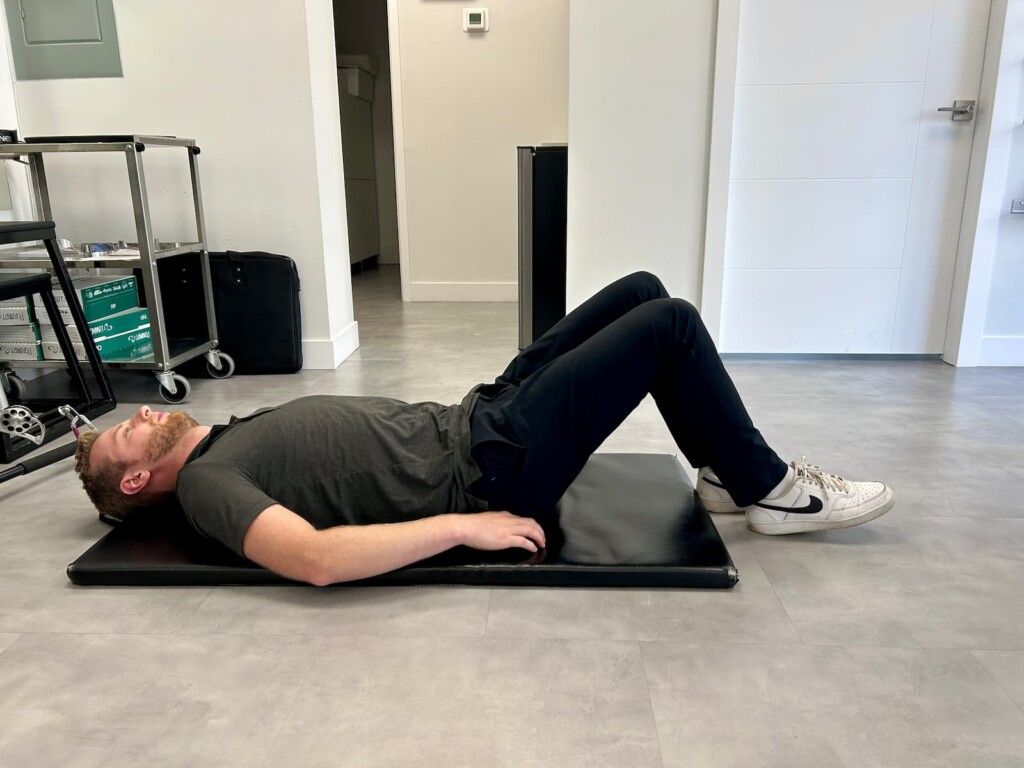
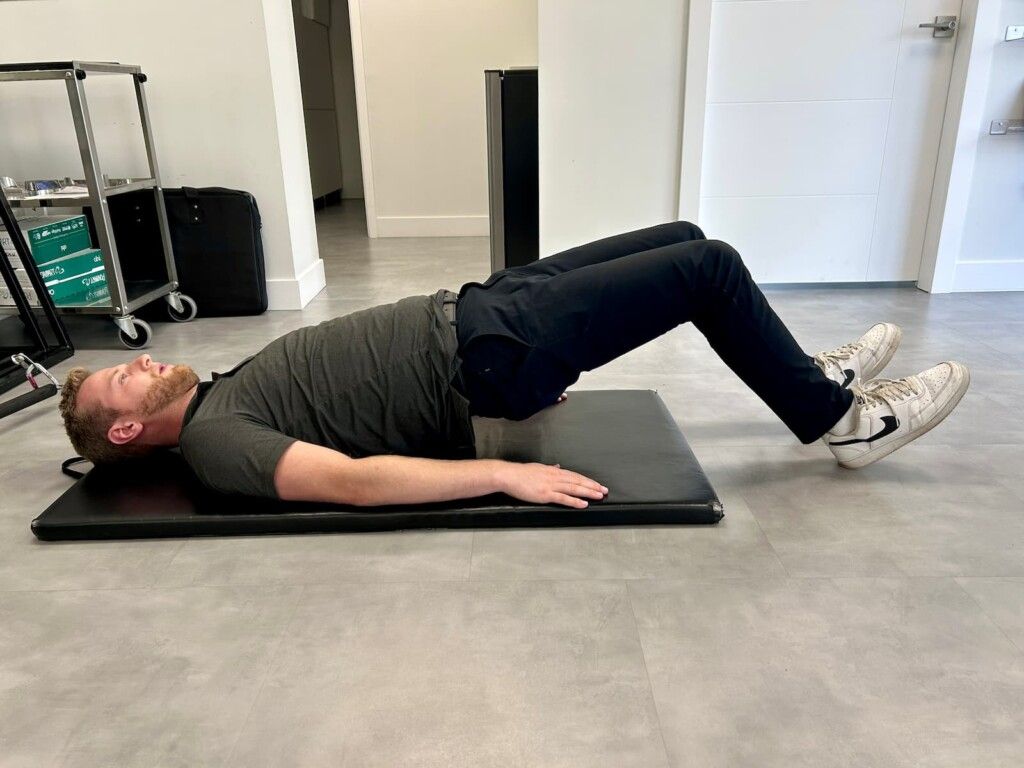
Single Leg Bridge
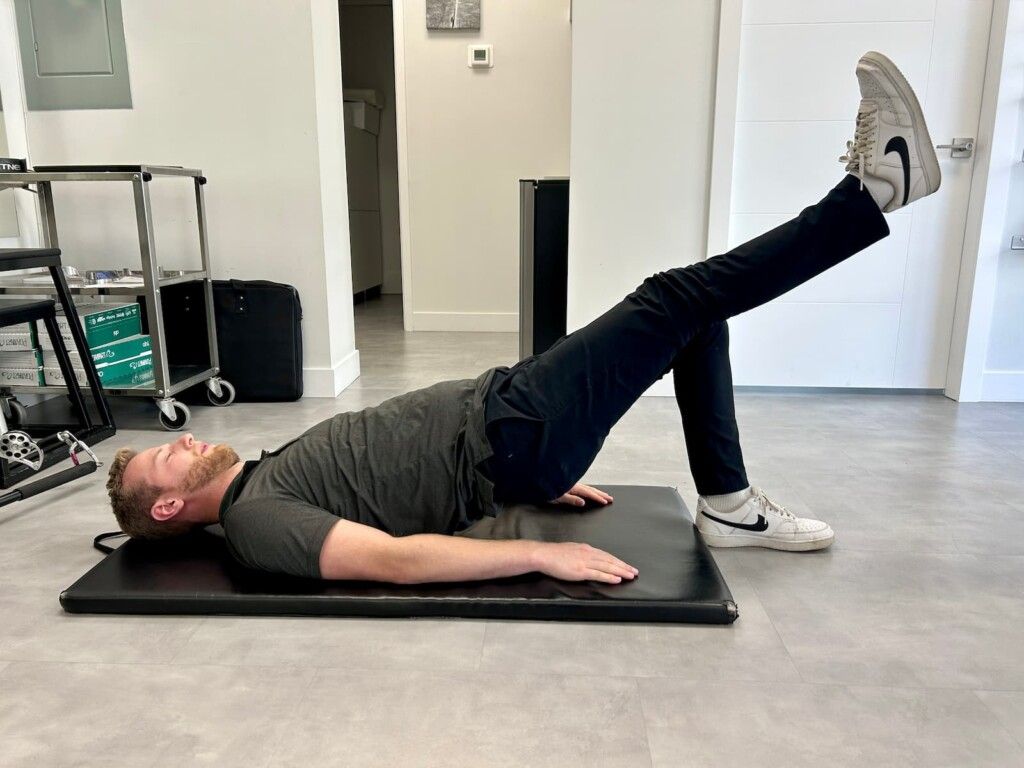
Double Leg RDL’s
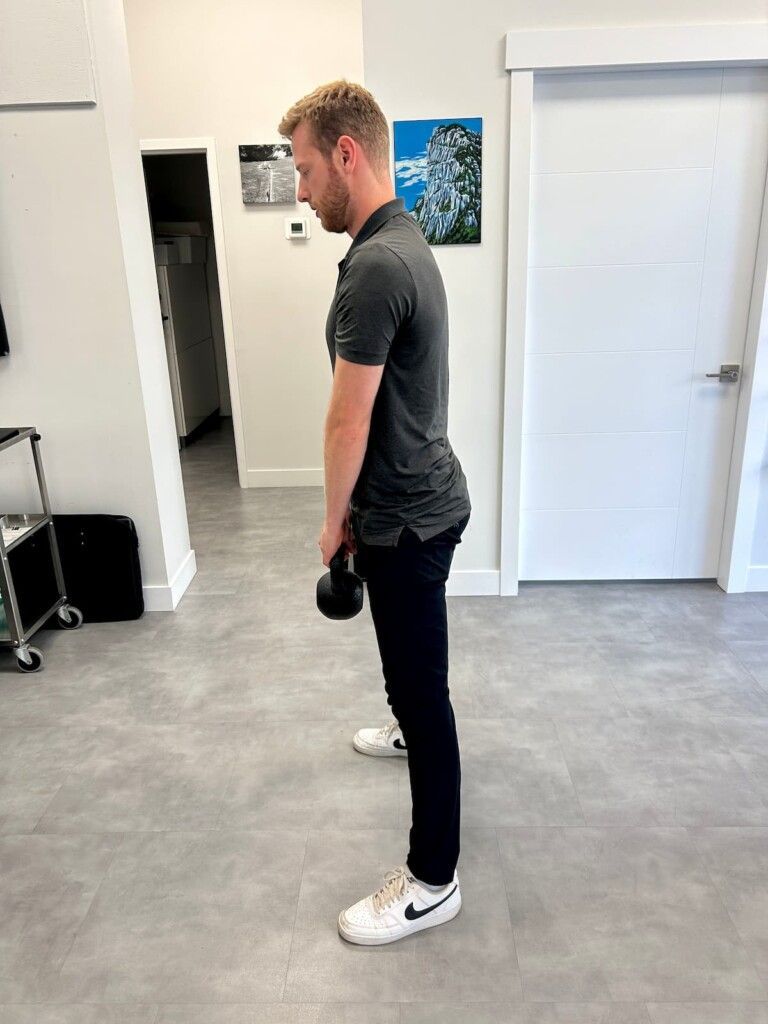
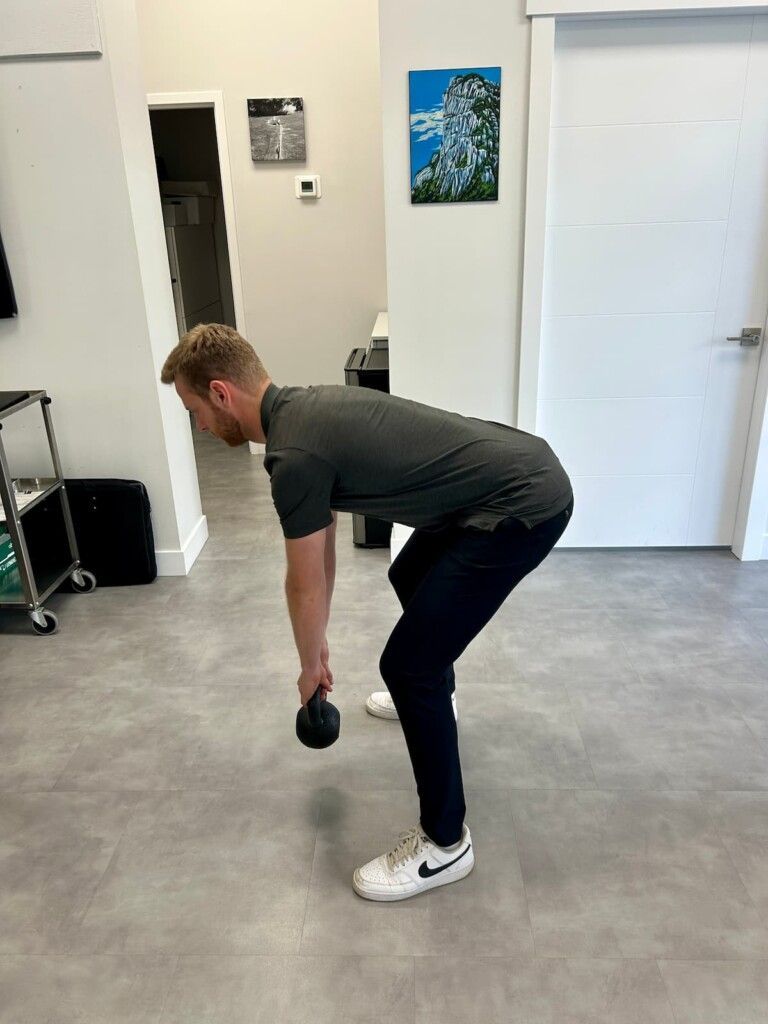
Single Leg RDL’s
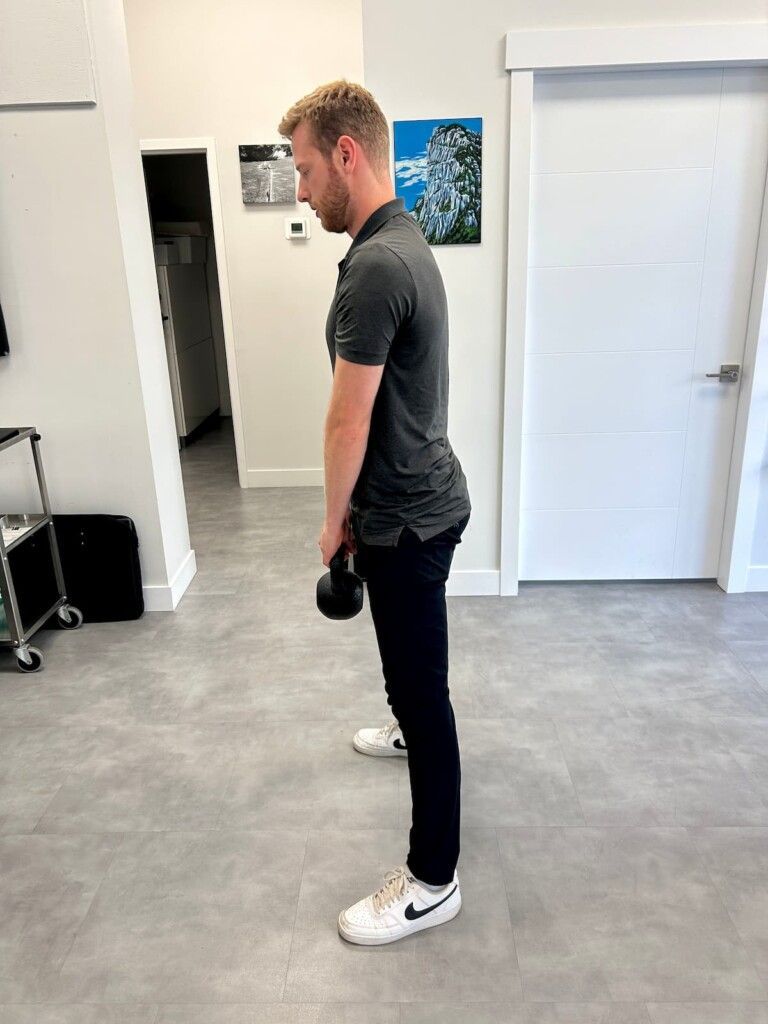
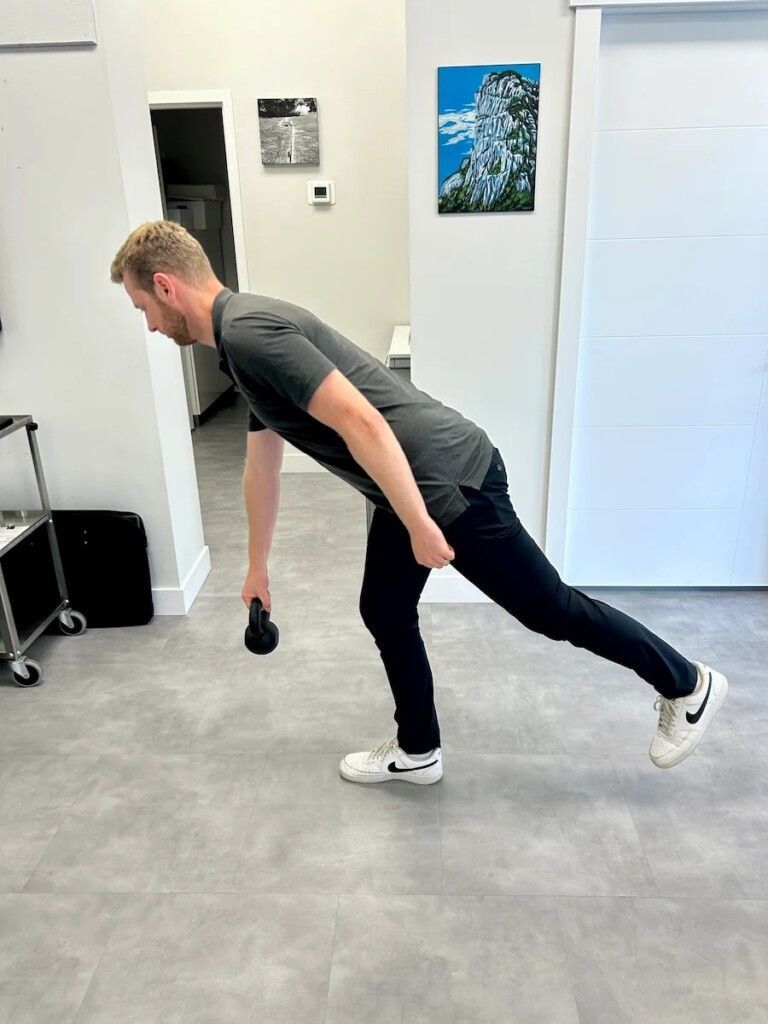
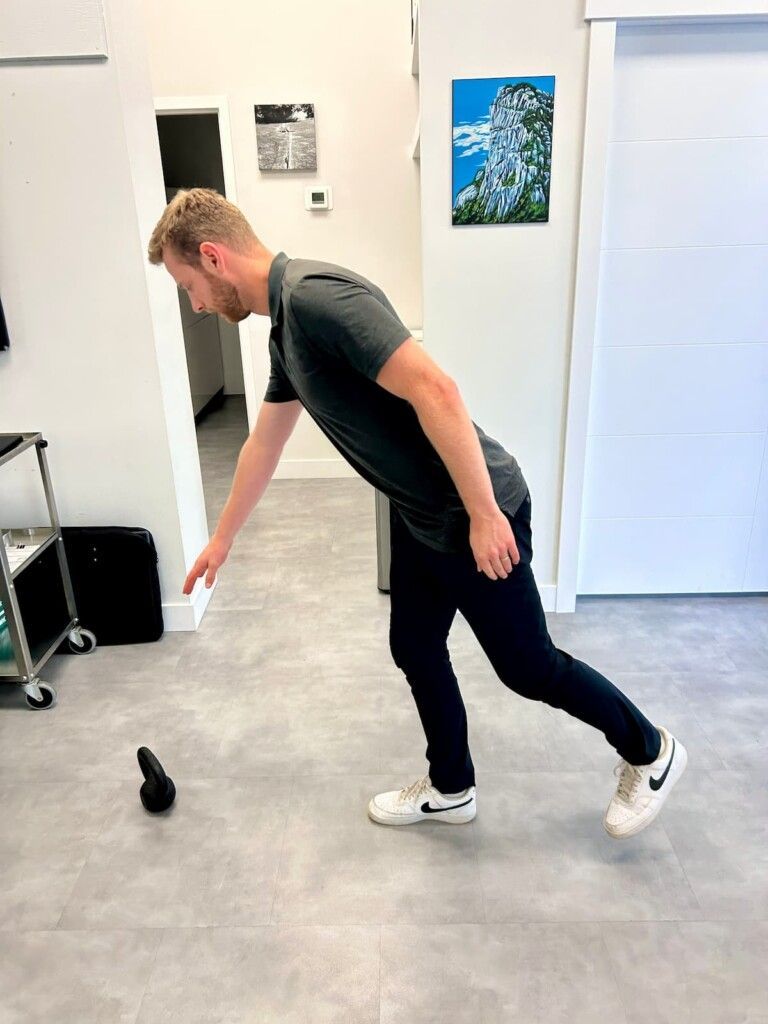
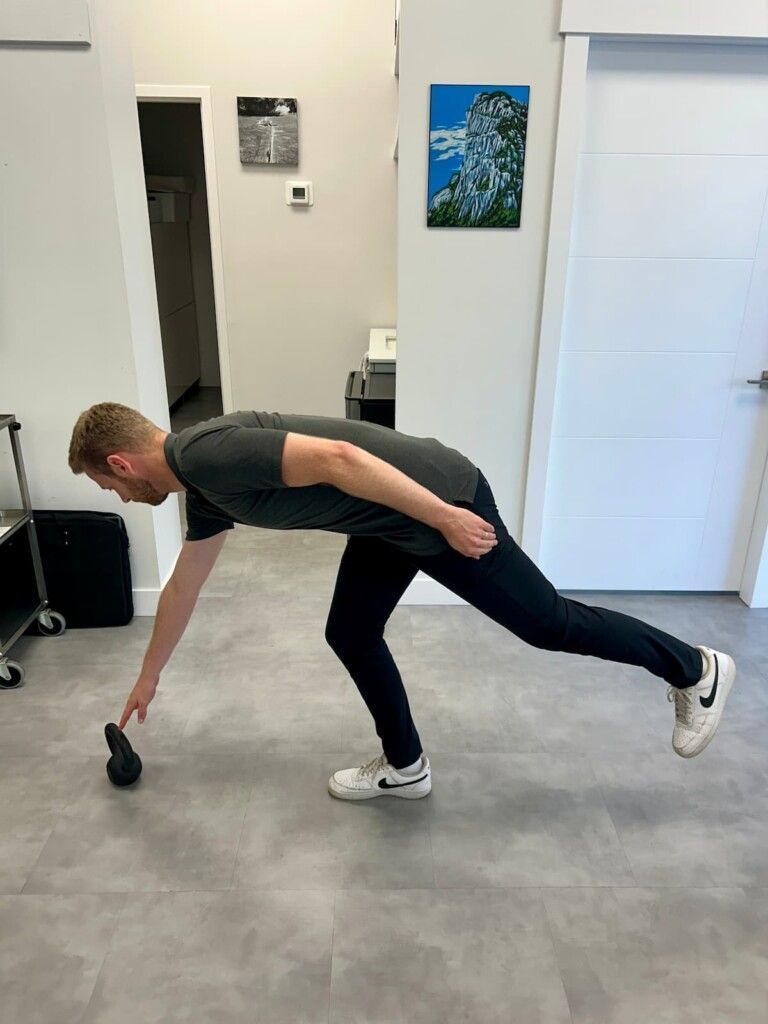
Askling Diver’s
Nordic’s
What else can be done?
In our clinical experience, people who keep injuring their hamstrings often share certain biomechanical patterns. That’s why your therapist will always be looking for factors that might make you more vulnerable.
Weak hamstrings and glutes relative to the quadriceps.
Recurring hamstring injuries may come with a strength imbalance between the front and back of the thigh. It’s usually not that the quadriceps are too strong, but that the hamstrings and glutes are relatively weak. We see this often in people who cycle a lot, because cycling is very quad-dominant and does little to challenge the hamstrings and glutes.
Tight hip flexors or quadriceps, often on the opposite leg.
When you run, each leg pushes off behind you while the other swings forward. If the hip flexors (such as the psoas) or quadriceps on your push-off leg are tight, that hip can’t fully extend. The pelvis tends to tip forward to compensate, which pre-stretches the hamstrings on the opposite leg just as they’re under the most strain. Freeing up hip extension can help you run more freely and take some of that load off the hamstrings.
Our therapists are trained to look for these patterns, both to help prevent injury and to speed your return to sport, so you can get back to performing at your best.
Frequently asked questions
Avoid aggressive stretching in the first week or two. Gentle movement and early strengthening are better. As you progress, lengthening-focused strength exercises, like the Askling exercises and Romanian deadlifts, restore flexibility while also building strength.
Most hamstring strains don’t need imaging. An ultrasound or MRI is usually only needed ifthere are signs of a more serious tear, such as a pop at the sit bone, significant bruising, agap or bunching in the muscle, or a lot of weakness.
Hamstring injuries have a high reinjury rate: close to one in three recur within a year. A complete rehab program, a gradual return to sprinting, and ongoing exercises like the Nordic hamstring exercise all help reduce that risk.
Key takeaways
Hamstring injuries have a high reinjury rate, usually because rehab isn’t long or challenging enough and athletes return to sport too soon. Rehabilitation needs to build enough strength to handle the forces of full-speed competition.
- Lengthening-focused rehab is key, done at the right intensity and for long enough.
- Stretch-type injuries often take twice as long as sprint-type injuries, so be patient.
- Tears involving the tendon are more complicated and slower to heal than muscle injuries.
- Some injuries need imaging or surgery, more often stretch-type injuries with a pop at the sit bone. Your therapist is trained to recognize these and refer you for medical care when needed.
- Return to sport based on checkpoints, not the calendar.
Book a hamstring assessment in Tsawwassen
If you’ve injured your hamstring, need an assessment and rehab program, want a boost to your current program, or have questions for us, our chiropractors at Aktiv Coast Healthcare are here to help. We also offer Active Release Technique and Lite Cure class IV laser therapy as part of your care.
Book online at coasthealthcare.janeapp.com or call us at (604) 943-1006.
Aktiv Coast Healthcare, Unit 113, 1315 56 Street, Tsawwassen, BC. Proudly serving Tsawwassen, Ladner, and the Delta community.
This article is for general education and isn’t a substitute for an individual assessment.