Back and Leg Pain from a Compressed Nerve: What’s Really Happening —
and a Simple Technique That Can Help
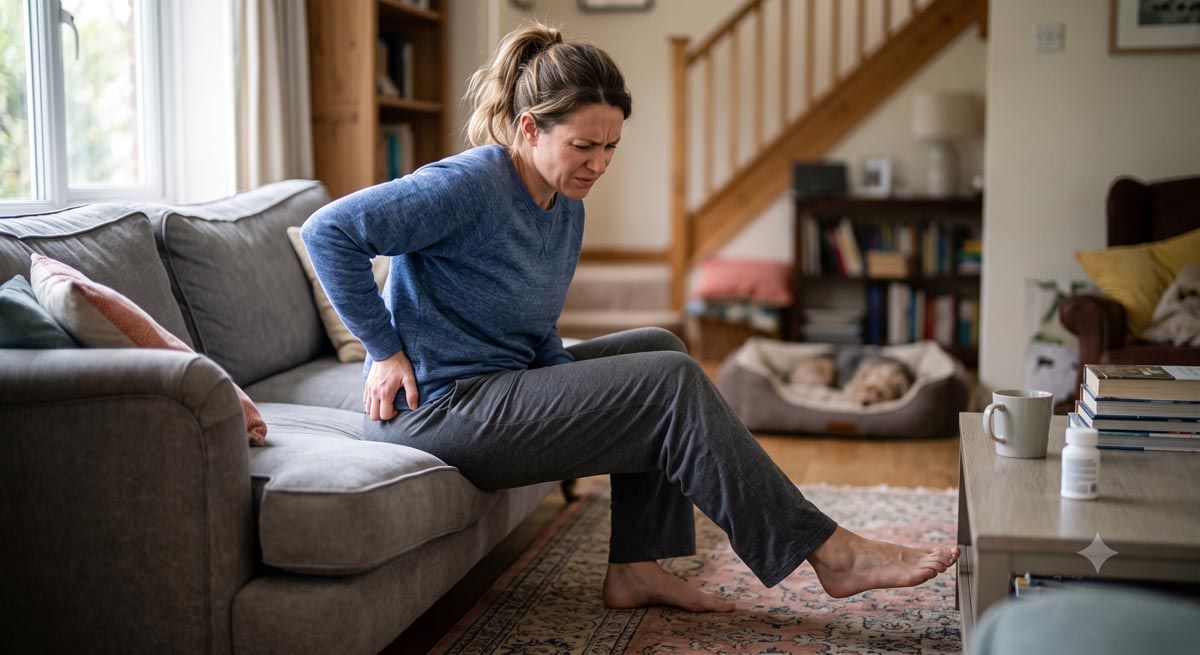
If you’ve ever had back and leg pain from a compressed nerve, you already know how debilitating it can be. Patients often describe it as sharp, electric, or burning — the kind of pain that’s so distracting it’s hard to think about anything else. In this article, we’ll walk through what causes this type of pain and show you an exercise that often brings real relief.
What causes a nerve to become compressed?
Nerve compression at the spine can happen for a number of reasons, but the two most common are osteophytes (bone growths) and disc herniations.
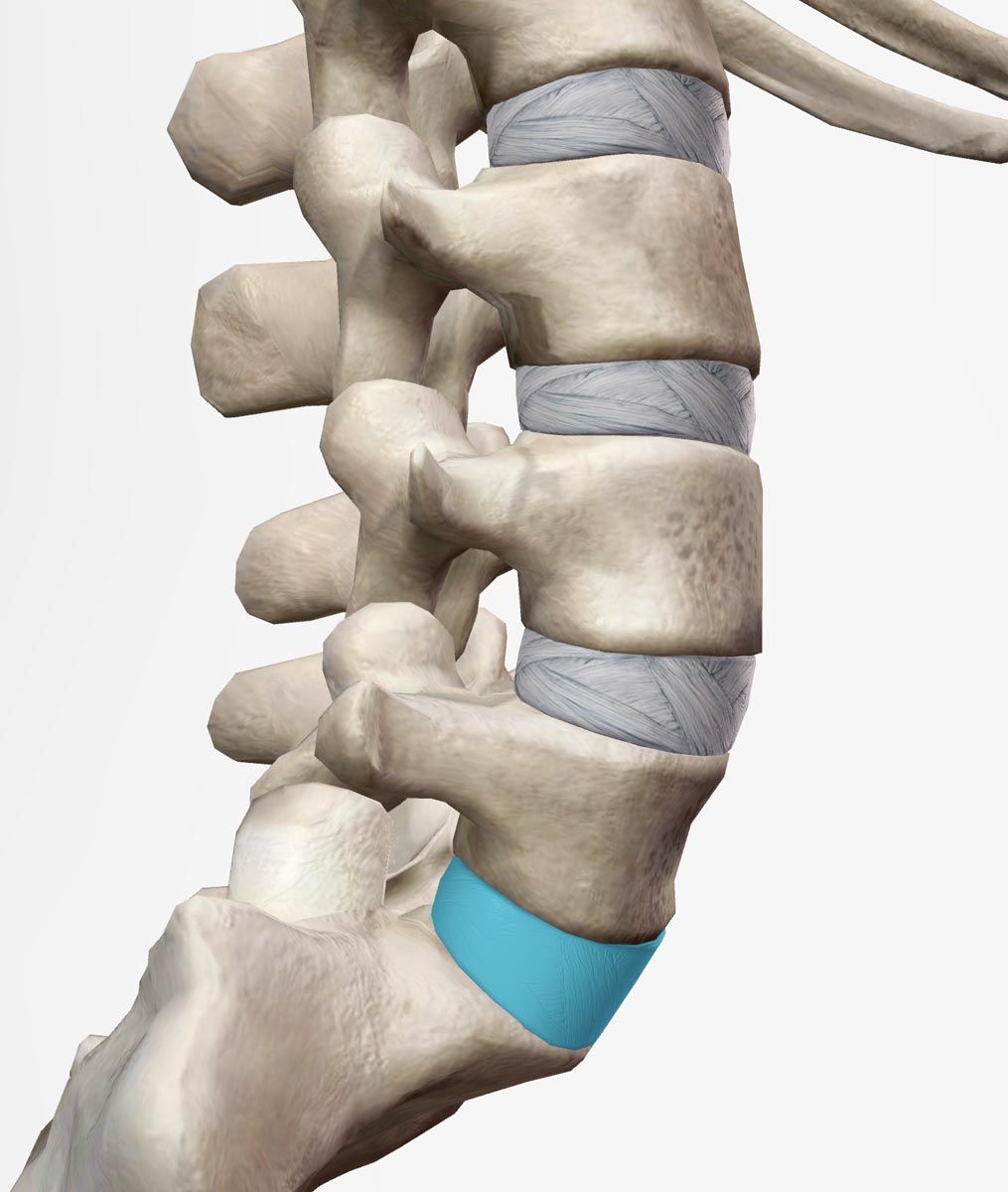
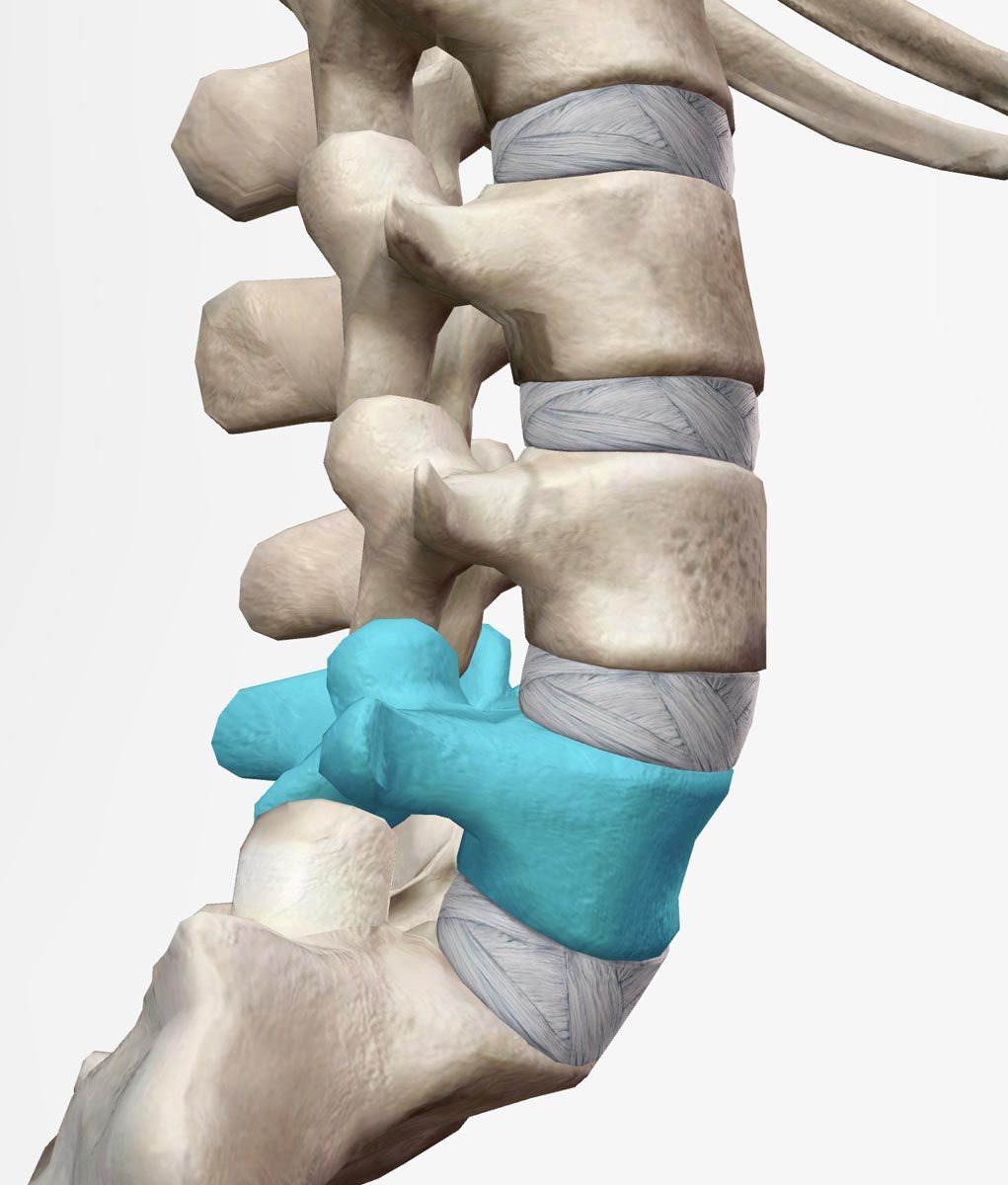
Osteophytes are bony outgrowths along the edge of a joint. They tend to form when disc space narrows (from cartilage loss) as part of the degenerative process we call osteoarthritis, and they’re more common in older patients. Osteoarthritis can affect any joint in the body, but here we’re focusing on the lumbar spine.
Disc herniations — sometimes called a “bulging disc” — develop as the tough, cartilage-like ring around the outside of the disc slowly deteriorates. Your discs are the fibrocartilage cushions that sit between the vertebrae and act like shock absorbers. The lumbar spine has particularly large discs, and they take on a lot: compressive load, torsion, and pressure from twisting, poor lifting form, squatting, bending, and deadlift-type movements.
But the biggest culprit is usually far less dramatic — the sustained pressure of sitting. In fact, there’s roughly 50% more load on your lumbar discs when you sit than when you stand. It’s one of the many reasons we encourage patients to get up and move every 20 minutes or so.
The trouble is, most of us forget to move once we’re deep in our work. So here’s a simple tip: set a timer for every 20 minutes. An old-fashioned egg timer works even better than your phone, since it won’t pull you into notifications when it goes off. When it rings, stand up, move around, and do a few exercises to counter the position you’ve been holding. (We’ll cover those exercises in a future post — stay tuned.)
“If the osteophyte was always there, why does it hurt now?”
This is one of the most common — and best — questions we hear. To answer it, we need to talk about the nerve itself.
Nerve pain from the low back often shows up as sciatica. It’s worth knowing that “sciatica” is a general term for leg pain, not a diagnosis. What we’re really talking about here is pain coming from the nerve roots.
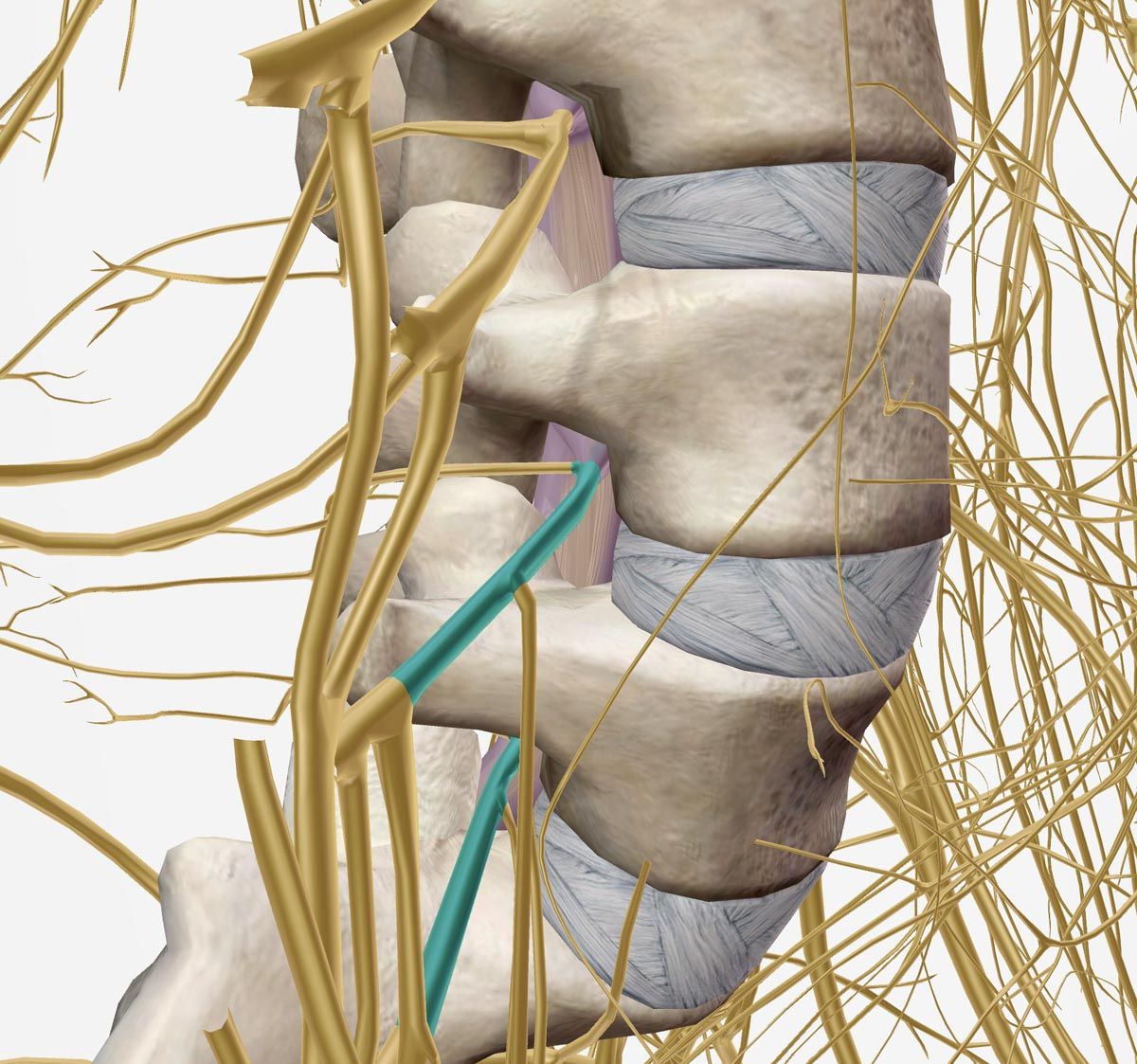
Each nerve root branches off the spinal cord and travels through a small opening between the bones of your spine called the intervertebral foramen (IVF). Ideally, the nerve passes through this space freely, without being crowded by bone, disc, or other tissue. But if a disc becomes enlarged or inflamed — from injury or degeneration — the space in the IVF narrows, and pressure builds on the nerve.
On top of that mechanical pressure, an injured disc releases inflammatory chemicals that irritate the nerve and make it more sensitive. A sensitized, inflamed nerve is far more likely to send a pain signal back to the brain — your body’s way of flagging a potential problem in the area that needs attention or protection.
There’s a third factor, too: blood flow. Increased pressure on a nerve reduces its blood supply. You’ve probably experienced a version of this — falling asleep with your arm outstretched and waking up with it “asleep.” The pressure of your body restricted blood flow to the nerves in your arm, temporarily starving them of oxygen and causing that numb, pins-and-needles feeling.
Now imagine your arm stayed in that position all the time. Eventually the nerve tissue would go without adequate blood flow for so long that it wouldn’t fully recover, even after you moved and circulation returned. That’s essentially what altered pressure and tension from an osteophyte or disc can do to the nerves running down your leg: change their blood supply, create pain, cause weakness, and — over the long term — lead to lasting damage.
When a nerve is inflamed, compressed, or short on blood flow, it can also become enlarged or thickened. Unfortunately, a swollen nerve is even easier to compress and even more easily irritated — a bit of a vicious cycle. Damage can also make a nerve less elastic, so it can’t glide and stretch with your body the way it should. This is a big part of why people with sciatica often struggle to bend forward or stretch their hamstrings. It’s usually not that the muscle is tight — it’s that the nerve can no longer move and lengthen with the body.
Finally, your overall physiology matters. Ongoing inflammation from poor diet, lack of sleep, alcohol, or certain medications can all affect nerve health, making nerves stiffer, more sensitive to pressure and blood-flow changes, and more easily irritated.
How it all stacks up
So it’s not that the disc or osteophyte doesn’t matter — it does. But the real picture is often a compounding effect: the disc or osteophyte narrows the space at the IVF, and the nerve itself is already damaged or sensitized, and general health habits are adding fuel to the fire. Each factor stacks on the others and raises the odds that the nerve will start causing you problems.
Why your MRI or X-ray doesn’t tell the whole story
This “combination of factors” idea helps explain something that confuses a lot of patients. We regularly see people with large disc herniations or significant osteophytes on their X-ray or MRI who have no symptoms at all — and, just as often, people with small findings (or none) who are extremely symptomatic. The size of a disc herniation or the amount of arthritis simply doesn’t always match up with how much pain someone is in, because symptoms come from that whole stack of factors working together, not from a single image.
Other variables play a role too. For example, the size of a person’s spinal canal varies from one individual to the next, which makes some people naturally more susceptible to this kind of nerve pain than others. There isn’t always a clean, straightforward answer.
This is why imaging can sometimes actually get in the way of recovery. When a patient sees a scary-sounding finding on a report, it’s easy to read it as a life sentence for pain — and that belief alone can make things harder. In reality, imaging like MRI and X-ray is most valuable for ruling out serious pathology — things like cauda equina syndrome, fractures, or bone lesions. What it usually doesn’t do is give us enough information to meaningfully change the treatment we’d recommend. It’s a useful piece of the puzzle, but it doesn’t tell the whole story.
So in these cases, the work is hands-on and individual. We partner with you to find the specific positions, exercises, and manual therapy techniques that make your symptoms better — then repeat them consistently, both in our appointments and at home, for long enough that the symptoms resolve and the nerve has a chance to heal. We know what tends to work, but every patient is a little different in which approaches help and how quickly we can progress. That’s normal, and it’s exactly why an individualized plan beats chasing an image.
The lumbar “opener”: a technique that can help
When leg pain is chronic, constant, and giving patients little relief, we often turn to a technique called the lumbar opener. The idea is straightforward: by gently opening the space at the IVF, we reduce pressure on the nerve and allow blood flow to return.
Both Dr. Linn and Dr. Gordon are trained in this technique through Michael Shacklock’s NDS (Neurodynamic Solutions) courses. It also has research behind it: in a pilot study conducted in a hospital emergency department, patients whose leg pain was traced to nerve root compression (after a thorough physical exam) were taught this technique to use at home, and the results were promising — the group using the opener did notably better than those receiving standard care alone.
In short, the static lumbar opener works as a kind of “first aid” for acute, highly irritable nerve root pain — something you can reach for at home when symptoms flare.
How to set it up
The instructions below use right-sided leg pain as the example. If your symptoms are on the left, simply mirror everything and lie on the opposite side.
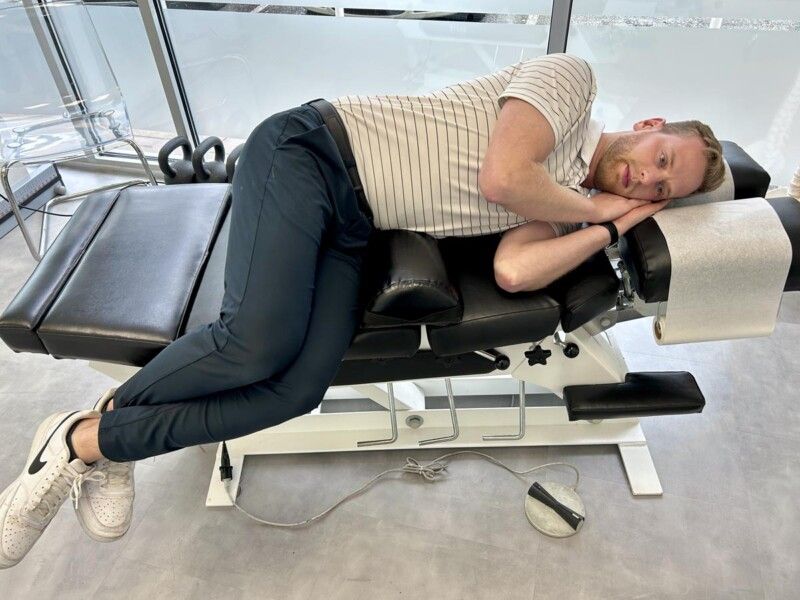
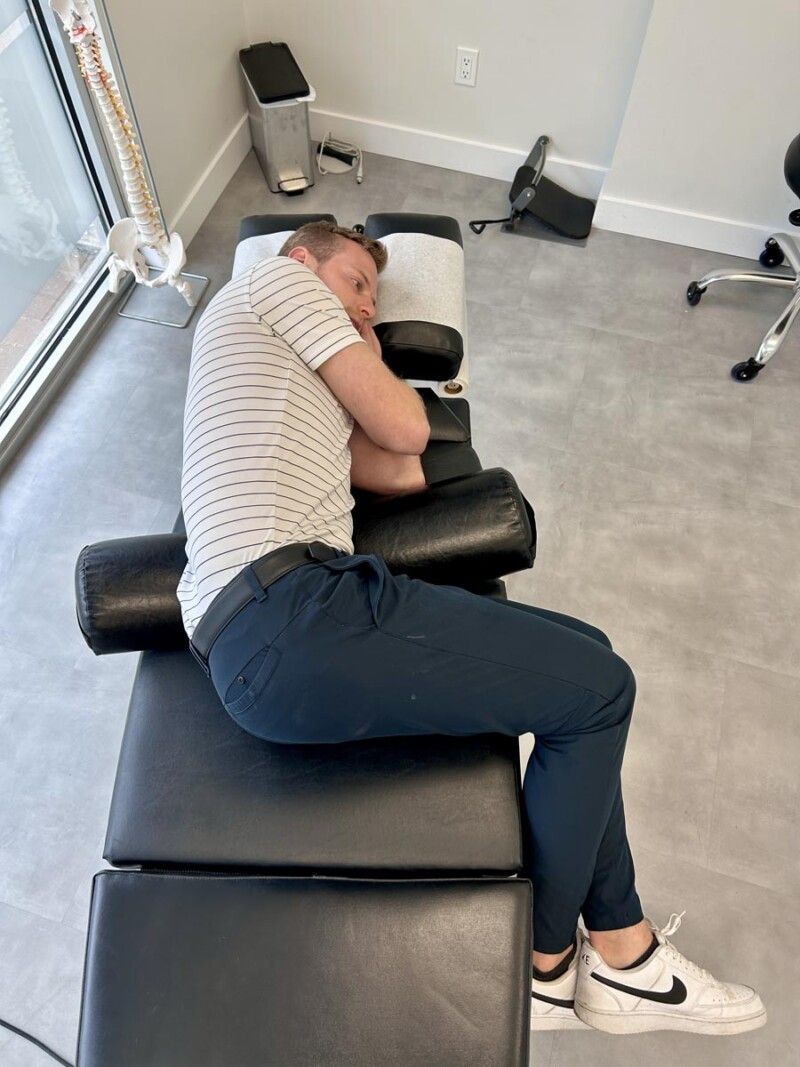
- Get into position. Lie on your side, on your unaffected side — so the painful side faces up toward the ceiling.
- Add a bolster. Place a firm pillow, rolled towel, or bolster under your waist on the down side. This creates a gentle upward curve through your spine that helps widen the narrowed space (the IVF) on your painful, top side.
- Curl up comfortably. Bring both hips and knees up to roughly 90 degrees, into a relaxed, comfortable fetal position.
- Stay square. Keep your shoulders and hips stacked in line with each other — no twisting through your trunk.
- Relax completely. Your leg symptoms should ease or “centralize” (move up toward your back and away from your leg). If your leg pain increases, ease off or stop.
If you need a little more opening
Some people need a bit more to get relief. If that’s you, try these progressions:
- Add a hip roll. Place a small towel roll between your down-side pelvis (ilium) and hip bone (greater trochanter).
- Drop the leg. Carefully let your top (painful-side) foot and lower leg hang over the edge of the bed or couch, keeping your hips flexed.
Important: If dropping the leg brings on or increases your nerve symptoms, bring your foot straight back up onto the bed and return to the simple waist-bolster setup. More opening isn’t always better — comfort and symptom relief are what matter.
Home care and dosage
- Hold: Start with about 30–60 seconds in position. As your symptoms settle, you can hold longer — up to a few minutes at a time.
- Repetitions: 3–5 holds per session.
- Frequency: 2–3 sessions per day, and up to once an hour if you need it as an in-the-moment tool during a flare.
- Aim for quality, not quantity. The goal is a sense of regional relief or “lightness” in the leg — never provoking or increasing symptoms. If a hold doesn’t feel better, adjust your setup rather than pushing through.
A quick but important safety note
Home techniques like this are a great first step, but they’re not a substitute for a proper assessment — figuring out why your nerve is being compressed is what allows us to build a plan that actually resolves it.
And please treat the following as a medical emergency: severe or rapidly worsening leg weakness, numbness around the saddle or groin area, or any loss of bladder or bowel control. If you notice these, seek care immediately — don’t wait to see if it passes.
We’re here to help
If back and leg pain is interfering with your life, come in and let us take a proper look. A thorough exam lets us confirm what’s driving your symptoms and tailor treatment — including techniques like the lumbar opener — to your specific situation. Let’s get you moving comfortably again.